Why Cheap Window Tint Fails in Miami's Summer Heat — And What 3M Ceramic Film Drivers Know
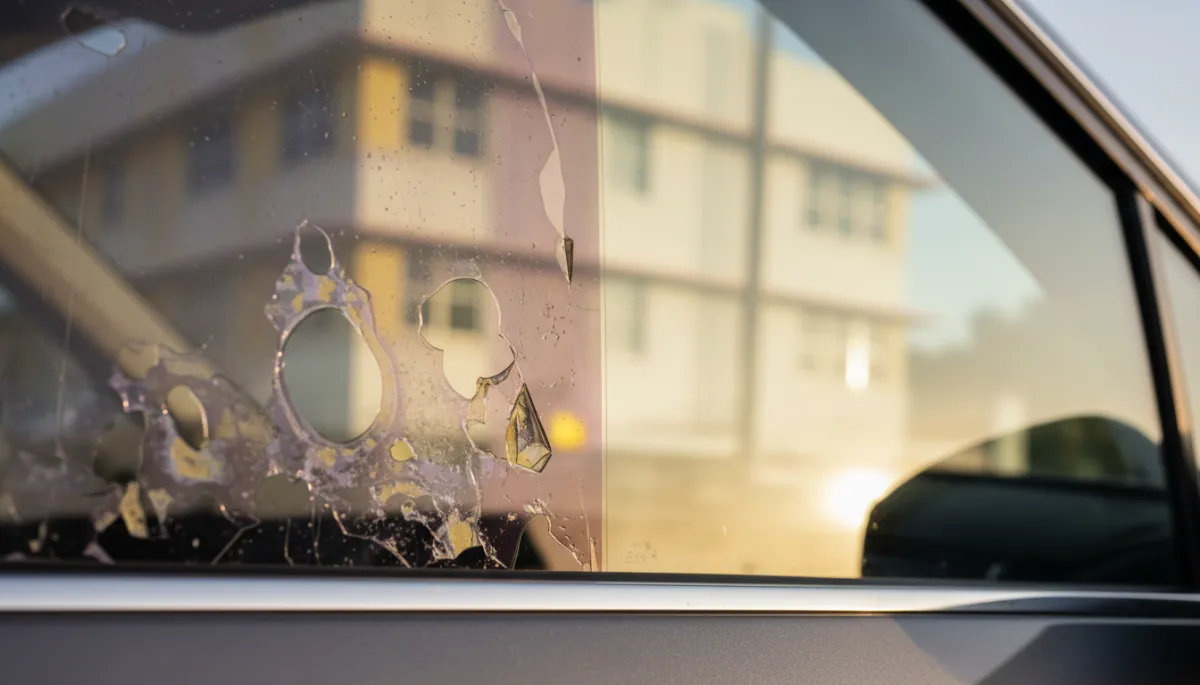
It's 9:30 a.m. on a Tuesday in Flagami, and the dashboard thermometer in Marco's 2020 Honda Accord already reads 94°F. He's been in the car for three minutes. He reaches up to adjust the visor and catches a glimpse of his rear passenger window — the film that was once dark and clean is now a mottled lavender-brown, crisscrossed with air bubbles and a long diagonal crack. The window tint he bought from a mobile installer eighteen months ago for $120 is finished.
Marco's story is playing out in parking lots all over Miami-Dade right now — in Sweetwater, Westchester, Doral, West Miami, and everywhere between Little Havana and Miami International Airport. Every South Florida summer, thousands of drivers discover that the “deal” they got on window tint wasn’t a deal at all. It was a delay. And now they’re paying for it twice.
If you recognize the signs — or if you’re shopping for tint and want to get it right the first time — here’s what every Miami driver should understand before spending a single dollar on window film.

The Signs Your Window Tint Is Failing in Miami's Heat
Window tint failure in South Florida follows a predictable pattern. Most drivers notice the symptoms gradually — until they can't ignore them anymore:
- Bubbling: Air pockets form between the film and glass as the adhesive breaks down under Miami's relentless UV rays and daily heat cycling.
- Color shift to purple or brown: Dyed window film changes color when UV radiation degrades the dye molecules — turning from dark black or charcoal to a faded lavender or muddy brown. This is the most visible and embarrassing sign of failure.
- Edge peeling: The film lifts from corners and door edges, letting in light and heat while looking terrible from the outside.
- Increased glare: As the film degrades, it loses its optical clarity and anti-glare properties — making visibility worse than no tint at all, especially on the Palmetto or the 836.
- Haze and surface scratching: Budget polyester films scratch easily and develop a milky haze that won't clean off no matter what you try.
None of these are freak accidents or bad luck. They’re the predictable failure mode of dyed and low-grade films that were never engineered to withstand a South Florida climate.
Why South Florida's Sun Destroys Cheap Tint — and What Makes 3M Ceramic Different
Miami-Dade sits at approximately 25.8° latitude, where solar radiation intensity is among the highest in the continental United States. On peak summer days, a car parked in direct sun near NW 8th Street in Flagami — or anywhere from Coral Gables to Doral — can reach interior temperatures between 160°F and 190°F. The UV index routinely hits 10 or above from spring through fall, which the National Weather Service classifies as “very high” to “extreme.”
Dyed films work by absorbing heat into themselves. Every day, the film soaks up the full intensity of South Florida’s solar radiation. That thermal stress — repeated hundreds of times — breaks down the dye molecular structure, degrades the adhesive, and eventually causes the film to delaminate from the glass. It’s not poor installation. It’s physics.
Basic metalized films do slightly better at heat rejection, but the metal particles they contain interfere with GPS navigation, cellular signals, and satellite radio — a serious issue for anyone commuting from Sweetwater through Westchester or navigating around the Airport area.
3M Ceramic Film uses an entirely different technology. Nano-ceramic particles — not dye, not metal — are embedded within multiple layers of high-strength polyester film. These ceramic particles block and reflect solar energy without absorbing it into the film itself. The result is a film that handles Miami’s heat without breaking down, without fading, and without interfering with any of your vehicle’s signals.
Two Miami Drivers. One Commute. A Very Different Experience.
Picture two drivers who both live in West Miami and commute daily — down Calle Ocho through Little Havana, past Westchester, to offices near the Airport area. They both decided to tint their cars the same summer.
Driver A called a mobile tinting service that came to his apartment complex in Doral. Cost: $140 cash. No invoice, no warranty documentation, no shop. The tint looked sharp for about a year. By the second Miami summer, the rear door windows were bubbling. By the third, he peeled most of it off himself because it was affecting his rearview visibility. Then he paid a professional shop to remove the remaining adhesive residue — and tint the car again from scratch.
Driver B went to Best Window Tinting & Car Accessories at 7284 NW 8th St — right in the heart of Miami, close to Flagami and just minutes from Little Havana and the Airport District. A 3M Authorized Dealer. The installation took a few hours in their professional shop. That was three Miami summers ago. The film still looks exactly as it did on day one: deep tone, optically clear, no bubbles, no fade. Her leather seats are pristine. Her AC reaches temperature faster. And she’s still covered by the 3M warranty.
The price difference between those two decisions? Less than what Driver A eventually spent on the removal and re-tint. Driver B paid once. Driver A paid three times.
What 3M Ceramic Film Actually Delivers for Miami Drivers
Here’s the performance profile of 3M’s nano-ceramic automotive film, in plain terms:
- Up to 99% UV rejection: Blocks both UVA and UVB rays — the primary causes of skin damage during your daily commute and of dashboard, leather, and upholstery degradation.
- Significant infrared heat rejection: Infrared radiation is what makes your car feel like an oven the moment you open the door. 3M ceramic film reflects a significant portion of infrared energy before it enters the cabin.
- Crystal optical clarity: No color distortion, no purple cast, no visual haze — day or night. The glass performs exactly as it should.
- Zero signal interference: No metal particles mean your GPS, cellular, toll transponder (SunPass), and satellite radio function flawlessly.
- Scratch-resistant hard coat: Resists the surface abrasion that clouds cheaper films over time, even with routine cleaning.
- Long-term color stability: The nano-ceramic structure doesn’t degrade under UV exposure — the film looks the same in year five as it did in year one.
What the 3M Authorized Dealer Warranty Actually Covers
When your installation is performed by a 3M Authorized Dealer like Best Window Tinting & Car Accessories, the 3M manufacturer’s warranty backs the job. This warranty covers manufacturer defects including bubbling, cracking, delamination, and color change — the exact failure modes that make cheap tint such a frustrating experience in Miami.
That’s 3M — one of the world’s leading materials science companies — standing behind your installation. Not a one-person mobile operation that may or may not answer calls next summer.
It’s also worth noting: Best Window Tinting does NOT offer mobile installations. Their professional shop at 7284 NW 8th St controls temperature, humidity, and dust during installation — variables that directly affect how cleanly the film adheres to the glass. Proper installation in a controlled environment is what makes the warranty valid and the results consistent. No parking lot tint job, no matter the brand of film used, can replicate that.
Florida Window Tint Laws in 2026: Know Before You Go
A quick but important note on Florida’s tint regulations — because “darkest possible” isn’t always legal:
- Front side windows: Minimum 28% VLT (visible light transmission) required.
- Rear side windows: Minimum 15% VLT required.
- Rear window: Minimum 15% VLT — unless dual outside mirrors are present.
- Windshield: Non-reflective tint above the AS-1 line only.
The team at Best Window Tinting knows Florida’s tint laws thoroughly and will guide you to the right film that maximizes your heat and UV protection while keeping you fully legal on every road from Sweetwater to South Miami to Coconut Grove.
Interior Protection, AC Savings, and Resale Value
UV radiation doesn’t just damage your skin on the daily commute — it systematically destroys your car’s interior. Dashboard plastics crack and warp. Leather fades, dries, and cracks. Steering wheel material becomes brittle. Factory carpet bleaches unevenly. These aren’t cosmetic inconveniences; they’re significant depreciation factors in Miami-Dade’s used car market, where buyers know exactly what South Florida sun does to an unprotected cabin.
A well-preserved interior commands a measurably higher resale price — whether you’re selling in Doral, Coral Gables, or Coconut Grove. Ceramic window tinting is one of the highest-ROI vehicle upgrades available in the Miami market.
And the AC savings are real. When your cabin doesn’t turn into a 170°F greenhouse, your air conditioning system reaches target temperature faster and runs under less load. Many Miami drivers with ceramic tint report a noticeable improvement in how quickly the car cools on hot days — which, compounded over a full South Florida summer, adds up to meaningful fuel savings.

One Appointment. Every Miami Summer, Handled.
Here’s the elegant part about getting 3M ceramic tint at Best Window Tinting & Car Accessories: it’s one visit. Their team assesses your vehicle, walks you through the film options — including the exact VLT percentages and heat rejection specs for each — and installs it in their professional climate-controlled shop. You drive out with factory-quality results, a 3M warranty, and a car that’s ready for every Miami summer ahead.
No peeling next summer. No purple cast the summer after. No re-tint bills. No removal headaches. One appointment, done right — so you can focus on your commute instead of regretting a shortcut that cost you more in the long run.
Whether you drive a sedan through Little Havana, an SUV from Flagami to the office, a truck parked all day near Miami International Airport, or a luxury vehicle that deserves the best protection available — the single smartest upgrade you can make this summer is professional 3M ceramic window tinting from a certified authorized dealer.
🏆 Best Window Tinting & Car Accessories — Miami-Dade
Miami’s Premier 3M Authorized Dealer
⭐⭐⭐⭐⭐ 4.8 Stars — 812+ Google Reviews
Serving Flagami · Little Havana · Westchester · Doral · Sweetwater · West Miami · Airport Area · Coral Gables · Coconut Grove
📍 7284 NW 8th St, Miami, FL 33126
🌐 bestwindowtinting.weebly.com
⭐ Read Our 812+ Google Reviews
✅ 3M Authorized Dealer | ✅ Ceramic Film Specialists | ✅ Commercial & Residential Window Film | 🚫 NO Mobile Tint
📲 Follow Us & Stay Connected
Follow us on Instagram @bestwindowtinting and Facebook Best Window Tinting Miami for before/after shots, tinting tips, and Miami car culture. Leave us a review on Google — it means the world to us: https://share.google/SeejrUMdvt2gHaz2L
South Florida’s summer doesn’t wait — and neither should you. Whether your cheap tint is already failing or you’re protecting a brand-new car before the next heat wave, the decision is simple: go with the installer Miami-Dade drivers have trusted for years. Call 786-917-2171 or stop by Best Window Tinting & Car Accessories at 7284 NW 8th St — your dashboard, your leather seats, and your skin will all thank you for it.
