What Miami Sun Really Does to Your Car Interior — And How to Stop It

Two Cars. Same Flagami Block. Completely Different Interiors.
Picture two cars parked on NW 8th Street in Flagami. Same make. Same model. Same year. Both bought around the same time by two neighbors who both commute through Miami every morning, sit in traffic on the Palmetto Expressway, and park under the same unforgiving South Florida sun.
Two years ago, one of those drivers stopped into Best Window Tinting & Car Accessories on NW 8th St and had 3M ceramic window film installed. The other driver thought about it, told himself he'd get around to it, and moved on.
Today, those two cars tell completely different stories.
The first car's leather interior still looks almost new — supple, rich, barely faded. The dashboard hasn't cracked. The steering wheel grips exactly like the day it came off the lot. That driver paid for the tint once, and every single day since, that 3M ceramic film has been quietly doing its job.
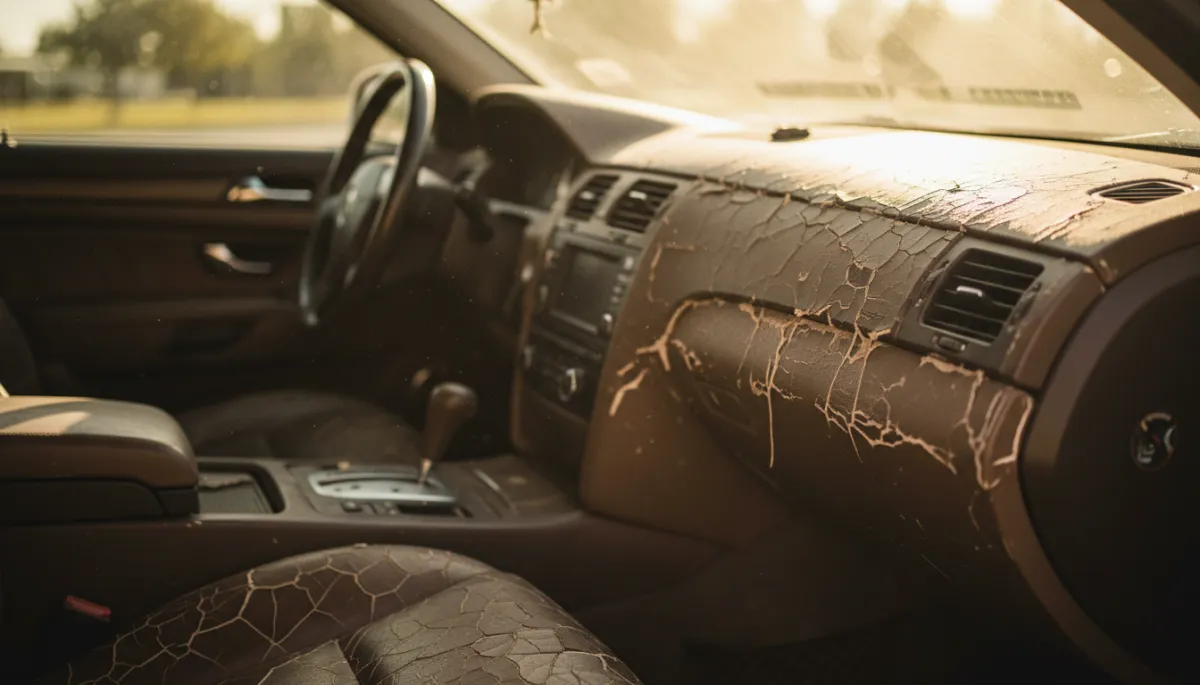
The second car? The dashboard has developed that familiar alligator-skin cracking along the center vents. The driver's side leather is noticeably lighter than the passenger side — bleached by UV pouring through the side glass on every morning commute. The steering wheel leather is separating at the seams. An interior detailing shop quoted over $1,800 to restore it to acceptable condition.
That's the Miami UV story. And it plays out on thousands of cars across Miami-Dade County every single year.
Why South Florida Is One of the Harshest Environments for Car Interiors
Florida doesn't just have sunny weather — it has extreme UV exposure. Miami's UV Index regularly hits 11 or higher during summer months. That's the "Extreme" category, the very top of the scale. Most of the continental United States rarely sees a UV Index above 8.
But UV radiation isn't the only problem. It's the combination of UV, infrared heat, and South Florida's relentless humidity that turns a Miami summer into an accelerated destruction cycle for car interiors.
On a typical Miami afternoon in July, the interior of a parked car with standard factory glass can reach 130°F to 160°F in air temperature. On the dashboard surface itself, direct sunlight can push temperatures past 180°F. At those levels, plastic components don't just get hot — they begin to chemically break down. UV radiation drives molecular bond breakdown in dyes, pigments, and polymers, while the heat accelerates every one of those chemical reactions. Miami's humidity adds a third layer: moisture cycles cause materials to expand and contract repeatedly, accelerating cracking in already UV-weakened surfaces.
The result: your car interior ages at a dramatically accelerated rate compared to vehicles in cooler, less sun-intense climates. And it happens whether you notice it or not — until one day you do, and by then the damage is already done.
What UV and Heat Actually Do to Your Car's Interior

Leather Seats
Leather is a natural material treated with dyes and conditioners that provide color, suppleness, and durability. UV radiation oxidizes dye pigments — that's the fading you see first, often unevenly between the driver's side (nearest the window) and the passenger side. At the same time, UV and sustained heat deplete the oils that keep leather flexible. Once those oils are gone, the leather dries, stiffens, and cracks. Those cracks don't stop once they start. They grow, and the only real fix is professional restoration or full replacement.
Dashboard and Trim
Modern dashboards are made from vinyl and thermoplastic compounds that contain plasticizers — chemical additives that keep the material soft and pliable. UV radiation and high heat cause these plasticizers to literally evaporate out of the material over time. The result is that familiar cracked, shrunken "alligator skin" appearance across the dashboard top. Once the plasticizers are gone, the material is rigid and brittle. There's no rehydrating it — you're looking at a resurfacing job or a costly replacement panel.
Steering Wheel
The steering wheel takes a compounded hit: UV exposure plus daily friction from your hands. UV dries out the leather wrap, while hand oils and humidity create a chemical environment that accelerates surface degradation. Wear starts at the 10 and 2 positions first. Then the stitching begins to separate. A quality steering wheel replacement runs $150 to $400 — more for luxury vehicles.
Carpet, Headliner, and Trim
Fabric fibers absorb UV and break down progressively, producing visible bleaching and color loss — most noticeable along the rear window shelf and door sills where sunlight hits at a consistent angle. Plastic trim pieces fade and become brittle. Infotainment screens develop UV hazing — a milky, clouded film over the display that reduces visibility and cannot be polished away.
The Real Cost of Skipping UV Protection
UV interior damage doesn't announce itself — it accumulates silently, then hits you when you're trying to sell or trade in your vehicle. Consider what full interior restoration can run:
- Leather interior restoration or replacement: $800 to $3,000+ depending on vehicle size and material
- Dashboard resurfacing: $200 to $800
- Steering wheel replacement: $150 to $400
- Carpet and headliner: $150 to $600
That's potentially $1,300 to $4,800 or more in avoidable repair costs — for a problem that a single investment in quality ceramic window film could have largely prevented. And that's before factoring in the hit to your car's resale or trade-in value. Any dealer or private buyer will notice a sun-damaged interior immediately, and it comes directly off your offer.
How 3M Ceramic Film Blocks UV Before It Reaches Your Interior

3M Ceramic Series window film works by embedding ceramic nanoparticles directly into the film matrix. These particles are engineered to absorb and reflect both UV-A and UV-B radiation before it ever passes through your glass and reaches your interior.
The numbers: up to 99.9% UV rejection. That means less than 0.1% of the radiation responsible for interior fading, cracking, and degradation actually reaches your seats, dashboard, and trim.
But 3M Ceramic film goes further than UV protection alone. It provides significant infrared heat rejection — meaningfully reducing the solar energy that turns your cabin into an oven on a Miami afternoon. That translates to a cooler interior, less load on your air conditioning system, and dramatically reduced heat stress on all interior materials. Unlike older metallic films, 3M Ceramic contains no metals that interfere with GPS navigation, cell signal, keyless entry, or toll transponders.
Every 3M film installation at Best Window Tinting comes backed by 3M's manufacturer warranty — covering film defects including bubbling, peeling, and delamination. That warranty is only valid through an authorized 3M dealer, which is exactly what Best Window Tinting is.
Serving Flagami, Little Havana, Westchester, Doral, and All of Miami-Dade
Best Window Tinting & Car Accessories is located at 7284 NW 8th St — right in the heart of Flagami, steps from the Calle Ocho corridor. If you live, work, or commute anywhere in the surrounding area, you're close.
Drivers from Little Havana and Flagami stop in regularly — the shop has become a neighborhood institution on NW 8th. Residents from Westchester and West Miami make the short drive over. Commuters from Doral, Sweetwater, and the Airport area — Miami International is less than 10 minutes away — frequently come in before or after work. Drivers from Coral Gables and South Miami make the trip specifically for the quality and the reputation that 812+ Google reviews reflect.
If you've been searching for best window tinting near Flagami Miami, 3M ceramic film near Little Havana, window tinting near Westchester Miami, ceramic window film near the Airport Miami, or simply car tint shop near me in Miami-Dade — this is where the search ends.
Why 812+ Google Reviews Say Best Window Tinting Gets It Right
A 4.8-star rating with over 812 reviews on Google isn't an accident. It's the result of consistent, professional work done the right way, on every vehicle, every time. As an authorized 3M dealer, Best Window Tinting is certified to install the full 3M window film line to manufacturer standards — which is also how your 3M warranty stays valid.
One thing they don't do: mobile tinting. All work is performed in their professional facility at 7284 NW 8th St. That matters more than people realize. Quality film installation requires a controlled environment — no wind, no airborne dust, no improvised conditions. When you bring your car to Best Window Tinting, the work gets done correctly, with professional equipment, by experienced installers who've done this thousands of times.
Ready to Protect Your Car Interior from Miami's UV?
Best Window Tinting & Car Accessories is Miami-Dade's trusted 3M Authorized Dealer. Stop in, call, or visit their website to schedule your appointment.
📍 Location: 7284 NW 8th St, Miami, FL 33126
📞 Phone: 786-917-2171
🌐 Website: bestwindowtinting.weebly.com
⭐⭐⭐⭐⭐ 4.8 stars · 812+ Google Reviews — See what Miami drivers are saying
Services: 3M Ceramic Window Film · Commercial Window Film · Residential Window Film · Car Accessories · Professional in-shop installation (NO mobile tint)
Follow us on Instagram @bestwindowtinting and Facebook Best Window Tinting Miami for before/after shots, tinting tips, and Miami car culture. Leave us a review on Google — it means the world to us: https://share.google/SeejrUMdvt2gHaz2L
