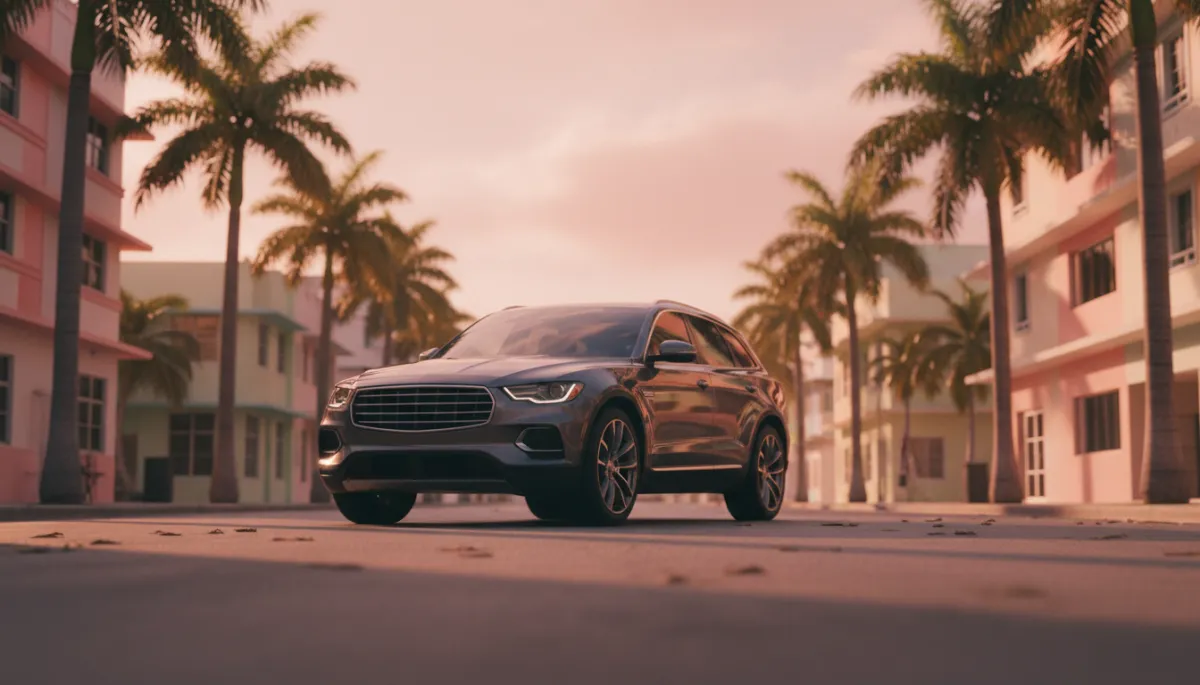
Your Skin Is Getting Burned On Every Miami Commute — Window Tint Fixes It Without Changing a Thing
You didn't move to Miami to hide from the sun. You're not going to start driving with a long-sleeved shirt and SPF 100 just to get to work. Nobody does.
And yet — every single weekday, commuters rolling down NW 8th Street through Flagami, idling on the 836 near the Airport, crawling down Bird Road toward Coral Gables, or sitting on the Palmetto heading into Doral are absorbing ultraviolet radiation through their car windows. Every single mile. Every single red light. Every single day.
You're not being careless. You're just doing what everyone in Miami does — driving. The problem is invisible, quiet, and cumulative. And the solution requires zero change to your lifestyle. Zero. That's what makes it so powerful.

The Ray You Don't Know About — And Why Your Car Isn't Stopping It
Most people know about UV rays in a general way. But there's a specific detail your dermatologist and car dealership both probably forgot to mention: standard car glass blocks UVB rays — but not UVA.
UVB rays are the ones that give you a sunburn. They're effectively stopped by your car's windshield and standard factory glass. So you don't burn during your commute. No redness. No obvious pain signal. Easy to ignore.
UVA rays are different. They penetrate deeper into the skin. They are the primary driver of premature aging, collagen breakdown, and long-term skin cancer risk. And they pass right through standard automotive glass — at nearly 100% transmission. The World Health Organization classifies UVA exposure as a Group 1 carcinogen.
Your left arm. Your left cheek and temple. Your left hand on the steering wheel. If you commute from Westchester, Little Havana, or Flagami heading east toward downtown every morning — that's your sun-side. Every day. Every year.
Researchers and dermatologists have documented this pattern for decades. There's a reason they consistently find disproportionate UV skin damage on the driver's left side of the body among long-term commuters. It's not coincidence. It's physics.
If It's Destroying Leather and Plastic, What Is It Doing to You?
Here's the thing that makes this real in a way that statistics never can: look at your dashboard.
Look at the cracking along the top of the dash where sunlight hits hardest. The fading leather at the bolster edge of the driver's seat. The slight bleaching on the steering wheel top. That's not age. That's not use. That's accumulated UV radiation breaking down material at the molecular level.

High-grade leather, engineered plastic, stitched upholstery — all of it succumbing to South Florida sun exposure over time. UV energy is relentless, and your car's interior is a closed environment that concentrates heat and radiation every afternoon it sits in a parking lot or crawls through Miami traffic.
Now ask yourself: if this is what UV exposure does to leather and injection-molded plastic — which are designed to be durable — what is it doing to your skin over 20, 30, 40 years of daily Miami commutes?
The answer is the same process. Just slower. Just quieter.
The Effortless Fix — And Why It Works While You Do Nothing
Here's where people expect the hard part. There isn't one.
You don't need to change your commute. You don't need to leave earlier or later to avoid peak sun hours. You don't need to reapply sunscreen before every drive. You don't need a different car, a different route, or a different lifestyle.
You need 3M ceramic window film — installed once, professionally, at Best Window Tinting and Car Accessories — and then you never think about it again.
3M ceramic film works differently from older window tint technologies. It doesn't just darken your windows — it uses nano-ceramic particle technology to reject infrared heat and block up to 99% of UVA and UVB radiation simultaneously. It doesn't interfere with your GPS, your phone signal, or your toll transponder. It doesn't bubble, fade, or turn purple over time the way dyed films do in Miami humidity and heat. And it doesn't require anything from you after installation.
You drive the same roads. You sit at the same red lights on SW 8th Street. You do the same school run through Coral Gables or the same airport pickup loop near MIA. Except now, the UV rays that were silently accumulating on your skin and degrading your interior are being blocked at the glass — before they ever reach you.
The tint does the work. You just drive.
South Florida UV Is Not Normal — It's Extreme
If you moved to Miami from anywhere north of Orlando, you already know the sun feels different here. That's not your imagination.
Miami-Dade regularly records UV Index readings of 11 and above — the Extreme category, where unprotected skin can begin to burn in as little as 10 minutes. The National Weather Service issues UV alerts for South Florida more frequently than nearly any other major metro in the continental United States.
And unlike a beach day where you're UV-aware and applying sunscreen, your daily commute from Flagami, Sweetwater, Doral, West Miami, or the Airport area doesn't come with a UV alert notification. You're just in your car. Going to work. Picking up the kids. Running to the grocery store. The cumulative exposure adds up — silently.
Families in Westchester sitting in afternoon school pickup lines. Professionals in Doral commuting west into direct afternoon sun. Residents of Little Havana and the Flagami corridor heading east on Calle Ocho toward downtown Miami. The routes are all different but the exposure is the same: constant, unfiltered UVA radiation through standard car glass.
In South Florida, window tinting is not a luxury upgrade. It's a health decision.
What 3M Ceramic Film Actually Protects
Here's exactly what changes the moment ceramic film goes on your windows:
- Your skin — up to 99% UVA/UVB block means your daily commute stops being an invisible sun-damage session
- Your children — kids in car seats and back seats get full protection, not just the driver
- Leather seats — UV degradation slows dramatically, preserving the look and value of your interior
- The dashboard — no more cracking, fading, or warping from concentrated heat and UV radiation
- Your steering wheel — stops the bleaching and material breakdown that makes steering wheels look and feel worn
- Interior temperature — 3M ceramic film rejects significant infrared heat, meaning your car is dramatically cooler after sitting in a Doral parking lot in July
- Your resale value — a car with a preserved, UV-protected interior holds its value better than one with a cracked dash and faded upholstery
All of this from one professional shop visit. Nothing changes about how you live, drive, or use your car — except that it works for you instead of silently against you.
Why Best Window Tinting and Car Accessories — Not Just Any Shop in Miami
There are tint shops across Miami-Dade. But there's a reason Best Window Tinting and Car Accessories has earned 4.8 stars across 812+ Google reviews from drivers in Flagami, Coral Gables, Westchester, Sweetwater, South Miami, and beyond.
They are a certified 3M Authorized Dealer — which means you get genuine 3M ceramic film with the manufacturer's full warranty, not a generic equivalent. Installation is done in a professional shop environment at 7284 NW 8th St, Miami, FL 33126 — minutes from Flagami and Little Havana, easily accessible from the Airport area, Doral, and West Miami.
This is not a mobile tinting operation. No parking lot installs. No improper prep conditions. Every job is completed in a controlled shop environment that ensures clean, bubble-free, precision application. When you invest in 3M ceramic film, you're paying for it to be done right — and that means a real shop, real equipment, and certified technicians.
They also offer commercial window film for Miami businesses and residential film for condos and homes throughout the area. The same UV protection and heat rejection that transforms your car's interior works equally well for your office windows, your storefront glass, and your living room.

The Math Is Simple
The average Miami commuter drives approximately 30 to 45 minutes each way to work. That's an hour or more per day, five days a week, fifty-plus weeks per year. Through some of the highest UV index readings in the United States. Through car glass that stops UVB but lets UVA pass right through.
Over five years, that amounts to thousands of hours of accumulated UVA exposure. Over a full career in South Florida? Decades of daily, unprotected radiation through your driver-side windows.
One trip to a professional 3M installer. That's the entire commitment. And then your car handles everything else — on every commute, every errand, every school pickup, every night out in Coconut Grove or South Miami — quietly blocking the radiation you'd otherwise never think about until your dermatologist mentions it during a routine check.
That's not a sales pitch. That's physics and math. And in Miami, both strongly favor ceramic window film.
Ready to Protect Your Family on Every Commute?
Best Window Tinting and Car Accessories
📍 7284 NW 8th St, Miami, FL 33126
📞 786-917-2171
🌐 bestwindowtinting.weebly.com
⭐ 4.8 Stars — 812+ Google Reviews — Read what your Miami neighbors are saying.
3M Authorized Dealer | Ceramic Film | Commercial and Residential Window Film | No Mobile Tinting — Professional Shop Only
Follow us on Instagram @bestwindowtinting and Facebook Best Window Tinting Miami for before/after shots, tinting tips, and Miami car culture. Leave us a review on Google — it means the world to us: https://share.google/SeejrUMdvt2gHaz2L
