Two Miami Cars Sat Under the Sun for Two Years — Only One Survived

Two neighbors in Flagami. Same street, a few blocks from NW 8th. Both driving 2022 Honda CR-Vs. Both park outside — no garage, no carport, no shade.
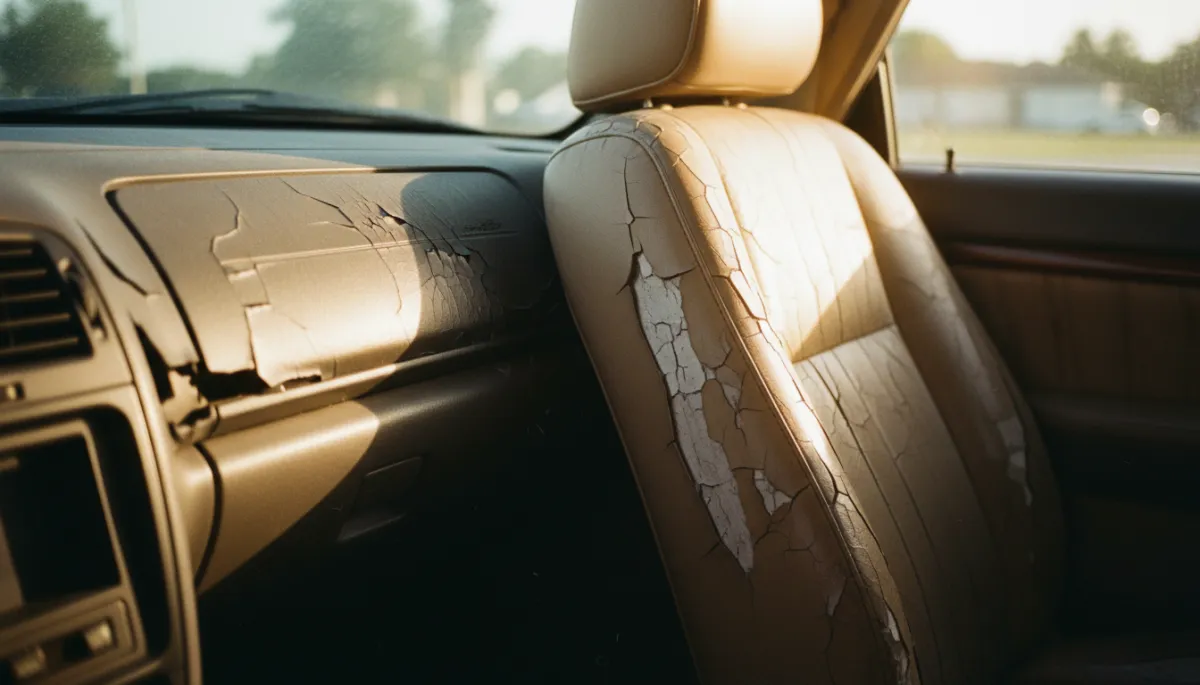
Two years later, one car's interior looks like it survived a desert crossing. The dashboard is cracked along the top ridge. The leather on the driver's seat has faded to a grayish tan, split along the seams where it flexes daily. The steering wheel is chalky to the touch. The infotainment screen carries a persistent haze along the upper corner — heat slowly warping the adhesive behind the glass. The owner is staring at a $1,400 interior restoration estimate for a car barely two years old.
The other car? Still looks like it just rolled off the lot. The leather is supple. The dashboard holds its original deep charcoal color. The cabin feels noticeably cooler the moment you open the door — even after sitting in a Westchester parking lot through a July heat wave. The owner hasn't thought about it once since it was done. "That's exactly the point," she says.
The difference wasn't the car, the parking spot, or luck. It was one decision: 3M ceramic window film, professionally installed at Best Window Tinting & Car Accessories in Miami-Dade.
What's Actually Happening to Your Car in South Florida's Sun
Most people think of sunlight as one thing. But what's hitting your car through its windows every day is two separate forces — working simultaneously — that your factory glass was never designed to stop.
The first is ultraviolet radiation, specifically UVA rays. Unlike UVB rays (which cause sunburns and are largely blocked by glass), UVA rays penetrate standard automotive glass with very little resistance. UVA breaks down the molecular structure of leather, vinyl, dyed fabrics, and the polymers in plastic trim. It's a gradual process — you don't notice it day to day. You notice it when you're trying to explain to a buyer in Doral why your two-year-old car looks five years older.
The second force is infrared heat — the radiant thermal energy behind the oven effect in a parked car. On a typical Miami-Dade afternoon in July, interior temperatures routinely reach 140°F to 155°F. That sustained, repeated heat degrades adhesives, warps plastics, dries out leather, and methodically destroys everything it touches: dashboard, steering wheel, armrests, seat bolsters, and the electronics behind your infotainment screen.
In South Florida, these two forces show up for work roughly 248 days a year. If your car is parked outside in Little Havana, near the Airport area, or in the open lots of Sweetwater — that's 248 days of compounding interior damage, year after year, with no offset.
Why Your Factory Glass Isn't Protecting You
Here's what most Miami drivers don't know: your windshield has significantly better UV protection than your side and rear windows. Windshields use laminated glass with a UV-blocking interlayer built in at the factory. Side windows and rear windows are typically standard tempered glass — lighter, cheaper, and far less effective at blocking solar radiation.
This means that while you're sitting in Airport-area traffic on the 836 or cruising through Coral Gables, the sun coming through your driver's side window is doing considerably more damage than most people account for. The steering wheel takes the worst of it. Then the dashboard. Then the seat beside you.
Standard aftermarket dyed tint offers some improvement — but it has a critical flaw in Miami's climate. The combination of UV intensity and coastal humidity degrades dyed film within two to three years. It can turn purple, develop bubbles, or simply lose its heat-rejection properties while still looking intact from the outside. Drivers throughout South Miami and Coconut Grove who had inexpensive tint installed several years ago are often surprised to find it's providing almost no protection anymore.
What 3M Ceramic Film Does — and Why It's a Different Category Entirely

3M ceramic window film isn't an upgraded version of regular tint — it operates on an entirely different principle. Instead of dyes that absorb and degrade, ceramic film uses nano-ceramic particles embedded in multiple stable layers. These particles are non-metallic and non-conductive, which eliminates a problem that metalized films create: interference with GPS, cellular signals, and toll transponders. With 3M ceramic, your SunPass works fine, and your phone keeps signal merging onto the Palmetto.
Here's what it delivers for your car interior:
- Up to 99% UV rejection — blocks virtually all UVA and UVB reaching your leather, dashboard, and trim
- Up to 80% infrared heat rejection — dramatically reduces the oven effect in a parked car, even in July
- Color-stable performance — won't purple, bubble, or degrade from South Florida humidity
- Full 3M warranty — transferable when you sell, adding measurable resale value
- Non-conductive construction — safe for all modern electronics, cameras, and sensors
For your leather: it stays supple and crack-free. For your dashboard: it holds its color through Miami summers. For your steering wheel: no chalky, sticky deterioration. For your infotainment screen: no heat-induced haze. And for you: a cabin that's measurably cooler every time you get in — which means shorter AC ramp-up and lower fuel costs on every drive across Miami-Dade.
The Miami Factor: Why UV Damage Happens Faster Here
Miami-Dade isn't just sunny — it's among the most UV-intense urban environments in the continental United States. The combination of low latitude, coastal albedo from Biscayne Bay amplifying solar energy, and consistently high numbers of clear days creates cumulative UV exposure that accelerates interior damage faster than in virtually any other major U.S. city.
Then add Miami's humidity. In neighborhoods like Sweetwater, West Miami, and the Flagami corridor — where most residents park on the street or in open commercial lots — heat and moisture combine to degrade inferior tint films rapidly. Peeling, bubbling, and adhesion failure that might take years in a dry climate can happen here in months.
And for most Miami-Dade residents, covered parking isn't an option. Apartments in Little Havana, homes in Westchester, commercial strips near the Airport area — very little shade. Your car absorbs the full force of South Florida's sun every single day. Without proper protection, your interior pays the price in ways that are expensive to reverse.
Florida Window Tint Laws: 2025–2026 Quick Guide
Florida's tint regulations specify minimum visible light transmission (VLT) by window position and vehicle type:
- Sedans — front side windows: Must allow at least 28% of light through
- Sedans — rear side and rear window: Any darkness is permitted
- SUVs & trucks — front side windows: Must allow at least 15% VLT
- SUVs & trucks — rear side and rear window: Any darkness is permitted
- Windshield: Non-reflective tint on the top 6 inches only
At Best Window Tinting, every installation is done in compliance with Florida law. Their team walks you through the correct VLT levels for your specific vehicle before the film goes on — not after. If you've ever wondered whether your tint would pass a traffic stop in Miami-Dade, they'll answer that clearly before anything starts.
Why Drivers from Doral to Coconut Grove Choose Best Window Tinting

Being a certified 3M Authorized Dealer isn't a marketing line — it means genuine 3M product, documented installation training, and access to the full 3M manufacturer warranty structure. That's meaningfully different from a shop sourcing generic ceramic film and calling it equivalent.
Best Window Tinting operates from their professional shop at 7284 NW 8th St, Miami, FL 33126 — centrally located in the heart of the communities they serve, just minutes from Flagami, Little Havana, Westchester, and the Airport area. They do not offer mobile tinting. That's intentional. Proper ceramic film installation requires a dust-free, climate-controlled environment with professional-grade application equipment. A parking lot or driveway simply cannot replicate those conditions — and the results show it in how long the film holds up.
With a 4.8-star rating across 812+ Google reviews, drivers from Doral, Sweetwater, Coral Gables, Coconut Grove, and South Miami make the trip specifically because the quality lasts — and because they're not back in two years with bubbles, purple film, and the whole job to redo.
They also handle commercial and residential window film — so if your business or Miami-area condo needs UV and heat protection, they have you covered there too.
Ready to Protect Your Car's Interior?
Don't wait for the first crack in your dashboard. In Miami-Dade, UV damage is cumulative — every day without protection is a day you can't get back.
📍 Best Window Tinting & Car Accessories in Miami-Dade
7284 NW 8th St, Miami, FL 33126 — Get Directions on Google Maps
📞 Call or Text: 786-917-2171
🌐 bestwindowtinting.weebly.com
⭐ 4.8 Stars | 812+ Google Reviews — Read & Leave a Review
3M Authorized Dealer | Ceramic Film | Commercial & Residential | Professional Shop Only — No Mobile Tinting
Follow us on Instagram @bestwindowtinting and Facebook Best Window Tinting Miami for before/after shots, tinting tips, and Miami car culture. Leave us a review on Google — it means the world to us: https://share.google/SeejrUMdvt2gHaz2L
