UV Damage Car Interior Miami | 3M Ceramic Film Stops It

Meet two neighbors. Both live on the same block in Flagami, just off NW 8th Street in the heart of Miami-Dade. Both drive similar midsize sedans. Both make the same daily commute — west down Calle Ocho toward Westchester, back through Little Havana in the late afternoon, windows catching every degree of that South Florida sun.
Five years ago, one of them pulled into Best Window Tinting & Car Accessories at 7284 NW 8th St and had 3M ceramic window film installed on every pane of glass. The other thought about it. Decided to wait. Figured it wasn't a priority.
Today, those two cars tell completely different stories.
In the first car — the tinted one — the leather is still supple. The dashboard holds its original deep color. The steering wheel grip is intact and comfortable, even after sitting in the Miami sun all day. The interior runs noticeably cooler before the AC even kicks in.
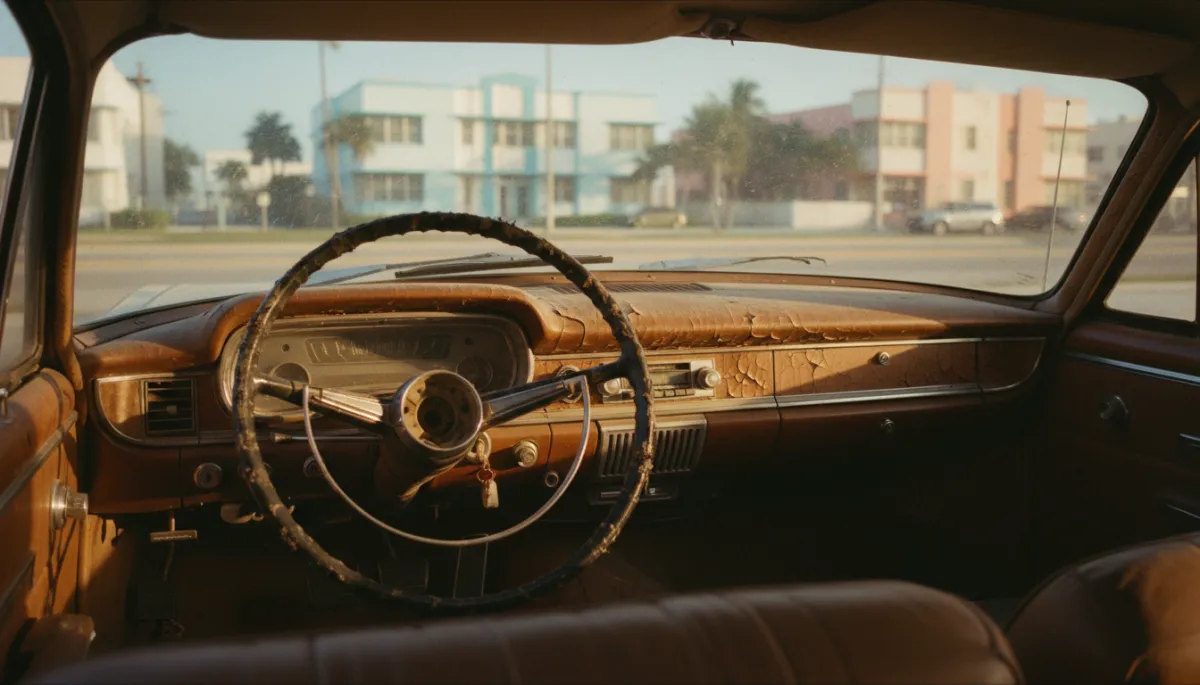
In the second car — the one that waited — the dashboard has faded from charcoal to a washed-out gray. The leather on the steering wheel is cracking along the seams. The plastic trim on the doors has taken on a chalky, bleached appearance. On a hot afternoon, the steering wheel is almost too warm to hold for the first few minutes of the drive.
Same neighborhood. Same sun. Same five years. Completely different outcomes.
This is what ultraviolet exposure does to a car interior in Miami-Dade. And for most car owners across Flagami, Little Havana, Westchester, and Coral Gables, it's happening right now — quietly, invisibly, one Miami afternoon at a time.
What Miami's UV Rays Are Actually Doing to Your Interior Right Now
The damage isn't dramatic. That's what makes it so effective. You don't notice the leather fading until one day you sit down and realize it no longer looks the way it did when you drove it off the lot. You don't catch the dashboard bleaching in real time — you just wake up one year and something's just... off.
UV rays penetrate standard automotive glass continuously. Even on overcast Miami-Dade days, UV exposure remains high — because clouds block visible light, not ultraviolet radiation. Whether you're commuting from Sweetwater to the Airport area or making the Doral-to-Coral Gables run, your car interior is absorbing UV all day long, whether you feel the heat or not.
The result is a process called photo-oxidation: UV energy systematically breaks down the molecular bonds in leather, vinyl, plastic, and fabric. Colors bleach out. Materials dry up. The polymers that keep leather supple begin to degrade. And once that process starts, you can't reverse it — you can only slow it down.
UVA vs. UVB — South Florida's Year-Round Assault, Simplified
There are two types of ultraviolet radiation that matter for your car interior: UVA and UVB.
UVA rays carry a longer wavelength and pass easily through standard automotive glass — and through most cheap window film. They penetrate deep into materials and are the primary driver of fading, cracking, and long-term breakdown. Standard factory glass blocks almost none of it. If your car doesn't have quality window film, your interior is essentially unprotected from UVA every single day.
UVB rays are shorter in wavelength and partially blocked by standard glass, but in Miami-Dade's intense radiation environment, even partial UVB exposure compounds into significant damage over months and years.
What makes South Florida uniquely brutal is the combination: intense year-round UV with no real low-sun season, high ambient heat that compounds material stress, and humidity that accelerates the breakdown of materials once UV has weakened their structure. A driver in West Miami or Westchester isn't just dealing with summer sun. They're dealing with eleven months of relentless UV pressure on every exposed surface inside their vehicle.
The Damage Timeline: What Flagami and Little Havana Drivers Notice First
The damage follows a predictable pattern. If you're driving daily across Miami-Dade, you're already somewhere on this timeline:
Year 1–2: Almost nothing visible. The UV assault is happening at the molecular level — materials weakening, dyes beginning to oxidize — but nothing looks dramatically different yet. This is the window when protection costs the least and matters the most.
Year 2–3: Dashboard color begins to shift. The darkest sections — around the instrument cluster and near the windshield — start fading first. Drivers commuting from Little Havana or Flagami toward Brickell in the morning sun often notice this first on the driver-side dashboard.
Year 3–4: Leather and vinyl show visible signs of stress. Cracking begins on the steering wheel and on the seat bolsters that catch direct light. The surface loses its finish quality — dry, slightly chalky, even after conditioning treatment.
Year 4–5+: Full deterioration. Leather seams split. Plastic trims become brittle. Interiors that were once a selling feature become a serious liability on resale. Any car owner in Coral Gables or South Miami who has sold a vehicle with a badly faded interior knows exactly how much it knocked off the price at trade-in.
The cost of replacing leather interior panels, refinishing a dashboard, or restoring badly faded trim runs anywhere from $800 to several thousand dollars — many times the cost of professional window tinting from the start.
How 3M Ceramic Window Film Blocks UV at the Source

This is where 3M ceramic technology changes the equation entirely.
Standard window film — the cheap kind sold at auto parts stores or installed by mobile tinters — works by dyeing or metalizing a thin polyester layer to reduce visible light. It cuts some glare and blocks some heat. But dyed film doesn't effectively block UVA radiation, which means your interior is still getting hit with the wavelengths that cause the most damage. Metallic film does better on heat rejection but creates interference with GPS, cellular signals, and electronic key fobs — a real-world problem in today's connected vehicles.
3M ceramic window film uses non-conductive nano-ceramic particles embedded throughout the film structure. This allows it to block up to 99% of UV radiation — both UVA and UVB — while maintaining exceptional optical clarity. No metallic interference. No signal degradation. And it delivers powerful protection without requiring an extremely dark tint, so drivers in Flagami, Coral Gables, and Westchester can stay well within Florida's legal tint requirements while fully protecting their interior.
As a certified 3M Authorized Dealer, Best Window Tinting & Car Accessories installs only genuine 3M product — not gray-market film, not third-party knockoffs. The 3M manufacturer's warranty is transferable and fully documented, meaning it adds real, verifiable value if you ever sell or trade the vehicle.
The logic is simple: UV can't fade or crack what it can't reach. 3M ceramic film is the barrier. Everything behind it — your leather, your dashboard, your steering wheel, your fabric, your trim — is protected from the moment the film goes on.
Why Cheap Tint Won't Cut It in Miami's Humidity
If you've driven around Miami-Dade for more than a few years, you've seen it: the purple-tinted rear window on a sedan in Doral, bubbling and peeling at the edges. The faded film on a truck in Sweetwater that's gone from deep black to a muddy greenish-gray. The tint that looks like it survived a tropical storm.
That's low-grade dyed film meeting Miami humidity — and losing badly.
Cheap non-professional tint degrades rapidly in South Florida's combination of UV intensity and moisture. The adhesive fails first. Then the dye bleaches. Then the film separates from the glass and bubbles. And here's the critical point most drivers don't realize: once the dye is bleached out, the film provides almost zero UV protection. You're back to bare glass — with the visual annoyance of failing film on top of it.
Quality matters enormously in this climate. 3M ceramic film is engineered specifically for environments like Miami-Dade — high UV, high heat, high humidity — and performs consistently for the life of the vehicle when installed correctly by a trained professional.
Best Window Tinting & Car Accessories does not offer mobile tinting. Every installation is performed in their professional shop at 7284 NW 8th St — a controlled environment where temperature, dust, and humidity are managed to ensure proper adhesion, no bubbling, and long-term performance. In Miami's climate, a controlled shop installation isn't just preferred — it's the difference between film that lasts and film that fails.
The Neighborhoods We Serve — Your Shop Is Closer Than You Think
If you're searching for the best window tinting near Flagami, you're already practically at the door. The shop at 7284 NW 8th St sits right in the heart of the Flagami corridor — one of the most accessible locations in Miami-Dade for drivers coming from every direction.
- Little Havana — Under 10 minutes heading west on Calle Ocho
- Westchester — Straight shot east on SW 8th Street
- Coral Gables — One of the closest 3M ceramic film options in Miami-Dade
- West Miami & South Miami — 10–12 minutes via SW 8th or Coral Way
- Sweetwater & Doral — Easy access via the Dolphin Expressway
- Airport Area (MIA corridor) — Practically right next door
With 4.8 stars and over 812 Google reviews, this shop has built its reputation one car and one perfect installation at a time — without shortcuts, without mobile tinting, and without compromise on product quality. Walk-ins are always welcome. No appointment necessary.
Whether you're searching car tint shop near me Miami, looking for interior protection window film in Miami-Dade, or specifically hunting for ceramic tint for leather seats Miami — this is where the Miami-Dade community comes when it matters.

📍 Visit Us — Best Window Tinting & Car Accessories
📌 7284 NW 8th St, Miami, FL 33126 — Get Directions
🌐 bestwindowtinting.weebly.com
⭐ 4.8 Stars — 812+ Google Reviews
✅ 3M Authorized Dealer | Ceramic Film | Commercial & Residential
🚫 We do NOT offer mobile tinting — professional shop quality only
Walk-ins welcome. No appointment necessary.
Follow us on Instagram @bestwindowtinting and Facebook Best Window Tinting Miami for before/after shots, tinting tips, and Miami car culture. Leave us a review on Google — it means the world to us: https://share.google/SeejrUMdvt2gHaz2L
