The Hidden Cost of NOT Tinting Your Windows in South Florida
The Hidden Cost of NOT Tinting Your Windows in South Florida
What Miami's 812+ Satisfied Customers Already Know — and What's Still Costing You

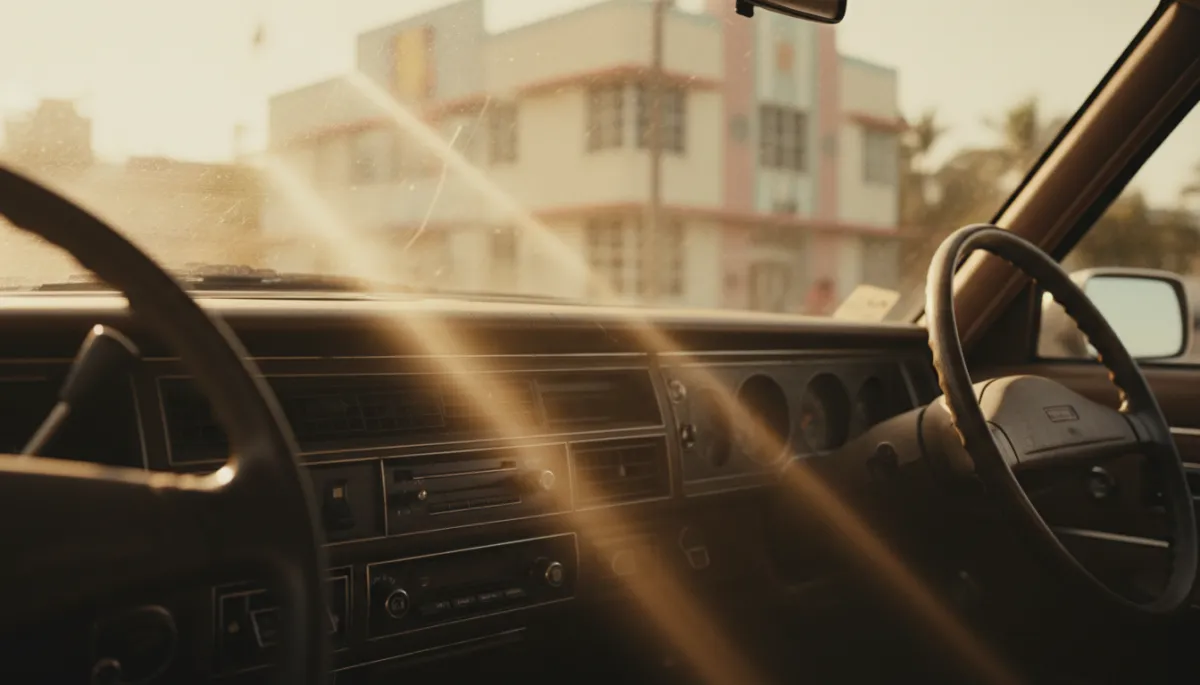
It's 8:17 AM on NW 8th Street. A black SUV idles at the light just past Calle Ocho, AC set to maximum, vents aimed directly at the driver's face. The dashboard glows amber under a relentless Miami sun. Outside, it's already 84°F — and the humidity has been climbing since sunrise.
Inside that car, something invisible is happening. Something expensive. Something irreversible.
Most Miami-Dade drivers think of window tinting as an aesthetic upgrade — a cool look, a privacy feature, maybe a way to block glare. But the real story isn't about what tinting adds to your car. It's about what going without tinting is quietly taking from you. Every. Single. Day.
Here's the math nobody tells you at the dealership.
The AC Tax: What Untinted Windows Are Doing to Your Fuel Bill
Your car's air conditioning system is one of the most energy-intensive components in the vehicle. In a city like Miami, where temperatures regularly hit 90°F+ from April through October — and rarely dip below 70°F even in January — your AC isn't a seasonal luxury. It's a permanent fixture.
Here's the problem: an untinted car cabin can reach interior temperatures of 130°F to 160°F when parked in direct sun. When you get in and crank the AC, the system has to work overtime to bring that temperature down. Quality window film reduces solar heat gain by 60–80%, meaning your AC system reaches your target temperature faster and runs less aggressively — translating directly into fuel efficiency and reduced wear on your AC compressor.
For daily commuters grinding through Flagami, cutting across Doral on the Dolphin Expressway, sitting in West Miami traffic, or running errands through Sweetwater and Westchester, this isn't a rounding error. It's a measurable, recurring expense that compounds month over month under South Florida's year-round sun.
Add to that the long-term wear on your AC compressor — a part that can run $1,200 to $2,500 to replace — and the decision to skip the tint starts to look very different when you run the actual numbers.
The Interior Destruction Timeline: What Happens to Your Car in 18 Months Without Protection
Miami's UV index is among the highest in the continental United States. On a summer afternoon, it regularly hits 11 or higher — classified as extreme by the World Health Organization. Your windshield blocks UVB radiation, the kind that causes sunburn. What it barely touches is UVA — the deeper-penetrating radiation responsible for interior damage and long-term skin aging.
Without window film, UVA enters your car unimpeded through every side window and rear glass. And it gets to work immediately.
The UV interior destruction timeline:
- Months 1–6: Subtle fading begins on dashboard plastics and leather surfaces exposed to direct sunlight — visible in certain light, easy to dismiss.
- Months 6–12: Color loss becomes obvious on fabric seats and upholstery. Leather starts to feel drier, stiffer — the earliest stage of cracking.
- Months 12–18: Dashboard cracking becomes apparent. Leather develops visible splits. Fabric fading is severe and permanent.
Now factor in resale value. A sun-destroyed interior is one of the most penalizing factors in used car pricing. Whether you're trading in at a dealership near Coral Gables or selling privately in South Miami, a cracked dash and faded seats can reduce your car's trade-in value by $1,000 to $3,500 — sometimes significantly more on luxury vehicles.
For drivers near Miami International Airport, Westchester, and Little Havana — where open-lot parking under relentless sun is the daily reality — this cumulative UV exposure is constant and completely preventable.
The UV Skin Tax: The Cost Nobody Wants to Talk About

Here's the uncomfortable truth about your morning commute through Flagami or your school run through Sweetwater: your left arm, your left hand on the wheel, and the left side of your face are receiving more UV radiation than the rest of your body.
Dermatologists have documented asymmetric skin aging on the driver's window side for decades. The driver's left side — closer to the glass — shows accelerated photoaging and higher rates of sun-related skin issues in long-term commuters. It's not hypothetical. It's what happens when you sit next to unprotected glass in South Florida's extreme UV environment, day after day, for years.
Standard automotive side glass blocks UVB almost entirely. UVA? Very little. Typically less than 30% of UVA radiation is blocked by standard tempered side glass. The rest passes straight through — onto your skin, your children's skin, and your car's interior surfaces.
Ceramic window film from a certified 3M Authorized Dealer blocks up to 99% of UV radiation — both UVA and UVB — across all glass panels. That's not a marketing claim. That's engineering.
Now consider your children. Car seats position kids directly next to rear side windows. On every school run from Westchester, every weekend drive through Doral, every family trip through Coral Gables — those rear windows are exposing your kids to unfiltered UV radiation for the full duration of the ride. For Miami families doing long daily commutes near Miami International Airport, Sweetwater, or West Miami, that exposure adds up fast.
Window tinting isn't just a car upgrade. It's a family health decision.
Two Miami Drivers. Same Car. 18 Months Later.
Two drivers. Both live in Flagami. Both bought the same 2023 Honda CR-V in the same month. Both drive similar routes through Little Havana, Westchester, and toward Miami International Airport every week.
Driver A said he'd get the tint later. Life got busy. The appointment never happened.
Eighteen months later: the dashboard has a visible crack running along the passenger side. The leather on the armrest is peeling. The AC struggles every morning because the car baked to 150°F daily in an open lot off NW 7th Street. Fuel efficiency dropped noticeably during the summer months. At his trade-in appointment, the dealer knocked $2,200 off the offer for interior condition. And his dermatologist flagged new sun damage on his left forearm.
Driver B made an appointment at Best Window Tinting on NW 8th Street the week she bought her car.
Eighteen months later: the interior looks factory-fresh. The cabin cools in minutes. The AC has not skipped a beat. She got a strong trade-in offer when she upgraded. And every school run through Sweetwater and Doral, she knows her kids in the back seat are protected from Miami's relentless UV.
Same car. Same neighborhood. Radically different outcomes — separated by one afternoon and one appointment.
Why Later Is the Most Expensive Word in Miami
UV damage is cumulative. It is also irreversible. A cracked dashboard doesn't un-crack. Faded leather doesn't restore itself. The UV your skin absorbs during untinted commutes doesn't come back.
Every day you wait, the damage compounds — quietly, invisibly, expensively.
This is why the 3M Authorized Dealer distinction matters. At Best Window Tinting on NW 8th Street, installation is performed in a controlled, professional environment — not on the street, not in your parking lot, not subject to wind, dust, and temperature variables that compromise adhesion and clarity.
The film is applied with precision, adheres without bubbles, and carries the performance backing of genuine 3M product quality. No mobile tinting operation can replicate that standard. Professional, in-shop application at 7284 NW 8th St means your film performs exactly as engineered — from the first Miami summer to the fifth.
The best time to tint was the day you bought your car. The second-best time is today.
What 812 Miami Customers Already Know
Best Window Tinting has earned a 4.8-star rating across 812+ Google reviews — making it South Florida's most-reviewed professional window tinting shop. In a city where everyone has an opinion and no one holds back, 812 Miami-Dade customers agreeing that this is the best in the business is not a small thing.
Customers from Flagami, Little Havana, Westchester, Doral, Sweetwater, West Miami, Coral Gables, South Miami, and near Miami International Airport have made the drive to NW 8th Street — and many have come back for their next vehicle. That's the kind of reputation you only build by doing the job right, every time.
Stop Paying the Untinted Tax — Get a Free Quote Today
The cost of not tinting your windows in South Florida isn't zero. It shows up in your fuel receipts, your trade-in quotes, your dermatology appointments, and your faded, cracked interior. The good news: one afternoon changes all of that.
- 📍 Location: 7284 NW 8th St, Miami, FL 33126
- 📞 Phone: +1 786-917-2171
- 🌐 Website: bestwindowtinting.weebly.com
- ⭐ Google Reviews — 4.8 stars, 812+ reviews: Read and leave a review
- 🏆 3M Authorized Dealer | Ceramic Film | Commercial and Residential | NO mobile tint
Walk-ins welcome. Professional in-shop installation only — because quality starts with the right environment.
Stay Connected with Miami's Premier Tint Shop
Follow us on Instagram @bestwindowtinting and Facebook Best Window Tinting Miami for before/after shots, tinting tips, and Miami car culture. Leave us a review on Google — it means the world to us: https://share.google/SeejrUMdvt2gHaz2L
