Protect Kids with Ceramic Window Tint in Miami
Family Health, UV Safety, Ceramic Window Tint, Miami-Dade
Kids and UV Exposure in Cars — Why Ceramic Window Tint is a Miami Family's Best Defense
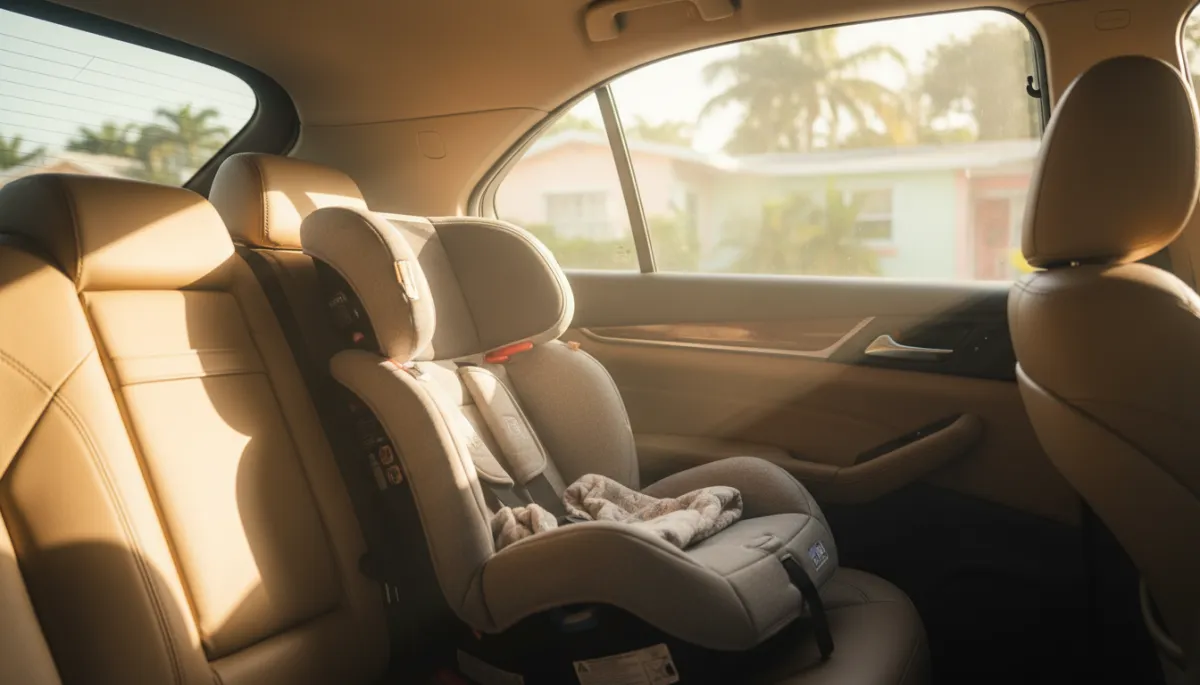
Late afternoon on NW 8th Street, the traffic near Miami International Airport slows to a crawl. The sun hangs low over Flagami, pouring straight through the rear glass of your SUV. In the car seat, your toddler finally naps, cheeks flushed, a thin blanket kicked off onto the floor. From the front, the AC feels cool enough. In the back, the sun is doing something your eyes can’t see — but your child’s skin can feel it.
In Miami, the UV index doesn’t just flirt with “high.” In August, the daily maximum regularly reaches 11 and above — an Extreme level where unprotected skin can start to burn in minutes. That’s not just on the beach in South Beach or Key Biscayne. That’s right over Little Havana, Westchester, Doral, Sweetwater, Coral Gables — and over every school pick‑up line and daycare run in between. For kids, whose skin is thinner and more vulnerable, those quiet, everyday car rides can quietly add up to a serious health risk.
Miami's UV Index — What the Numbers Actually Mean for Your Kids
Miami is famous for its sunshine, but the numbers behind that sunshine are sobering. Long‑term data show that in August, our city routinely sees a maximum UV index around 11–11.9, firmly in the “Extreme” category. Even the more conservative averages place midday UV around 7 — still “High” risk. On days like these, national weather services warn that unprotected skin can burn in less than ten minutes, especially in children and people with lighter complexions.
The American Academy of Dermatology and pediatric groups emphasize a simple but crucial point: UV radiation is cumulative. About a quarter of our lifetime sun exposure happens before age 18. Children and teens often spend more hours in the sun than adults, and their skin is physically thinner, with less natural protection. That means every school run down Calle Ocho, every drive from West Miami to a soccer practice in Doral, is another layer of UV your child carries into adulthood.
National cancer registries remind us that melanoma — while still rare in children — is the most common skin cancer in people under 20. Around 300 cases of melanoma are diagnosed in U.S. patients under 20 each year. Studies have shown that blistering sunburns in childhood and adolescence significantly increase the risk of melanoma and other skin cancers later in life. And while we tend to think of those burns as “beach days gone wrong,” a lot of the UV that matters most never looks like a dramatic burn at all. It’s the daily, invisible dose that quietly damages skin cells over years.
Dermatology guidance for families in high‑UV areas like Miami usually includes broad‑spectrum SPF 30+, protective clothing, hats, and shade. But there’s one environment where most parents assume their kids are already protected — the car. Unfortunately, that assumption doesn’t match the science, and that gap is exactly where a “health‑first” window film Miami‑Dade family solution becomes so important.
The Glass Myth: Why Your Car Windows Don't Protect Your Kids
Most parents feel an instinctive sense of relief once the car doors close. The sun might be blinding at the gas station on Flagami, but inside the cabin the light is softer, the AC is humming, and the glass feels like a barrier. It’s easy to believe that barrier is also blocking the dangerous parts of the sun’s rays. The reality is more complicated — and more concerning for kids in the back seat.
Sunlight includes two main types of ultraviolet rays that affect skin: UVB and UVA. UVB is the shorter‑wavelength radiation most associated with sunburn. Standard automotive glass — especially the windshield — blocks a good portion of UVB. That’s why your child may not come out of the car visibly red after a drive through Westchester or Little Havana. But UVA is different. These longer‑wavelength rays penetrate more deeply into the skin, driving premature aging and playing a major role in melanoma development. And ordinary side and rear windows let most UVA straight through.
In many production vehicles, the windshield is laminated and offers decent UV protection, but the side and rear glass — exactly where your kids sit — are often tempered glass with little to no UVA blocking built in. That means a 20‑minute school run along NW 8th Street, or a daily commute from Sweetwater to Coral Gables, can bathe your child’s arms, legs, and face in high‑intensity UVA day after day. The cabin may feel cool, but UVA doesn’t care about temperature. It passes through glass and clouds with ease, quietly damaging skin cells without a dramatic burn to warn you.
What about those cute fabric sun shades clipped to the window? They help with glare, and they’re better than nothing when parked, but they’re not designed or tested as medical‑grade UV protection. They shift, they leave gaps, and they usually block visible light more than the invisible UVA that matters most. While you’re driving down the Dolphin Expressway or through West Miami, the angle of the sun changes constantly. Rays sneak around the edges, bounce off light interiors, and still reach the back seat. The result: your kids can be irradiated without any obvious sign that it’s happening.
How Ceramic Window Film Changes Everything — Without Changing Anything
The good news is that closing this gap doesn’t require you to overhaul your family’s routine. You don’t need to avoid mid‑day car rides, change schools, or slather sunscreen on a half‑asleep preschooler every time you buckle them into a car seat. This is where the “effortless solution” comes in: high‑quality ceramic window film turns your existing vehicle into a rolling layer of sun protection — quietly, permanently, and without asking you to do anything different day to day.
Modern ceramic films, like 3M ceramic window tint Miami‑Dade parents choose at Best Window Tinting, are engineered specifically to block the wavelengths that matter most for health. The right UV protection window tint Miami families install can block up to 99.9% of UV rays — both UVA and UVB — across the side and rear windows where your children ride. That means the invisible radiation that used to pour through the glass is now stopped at the surface, before it ever reaches your child’s skin.
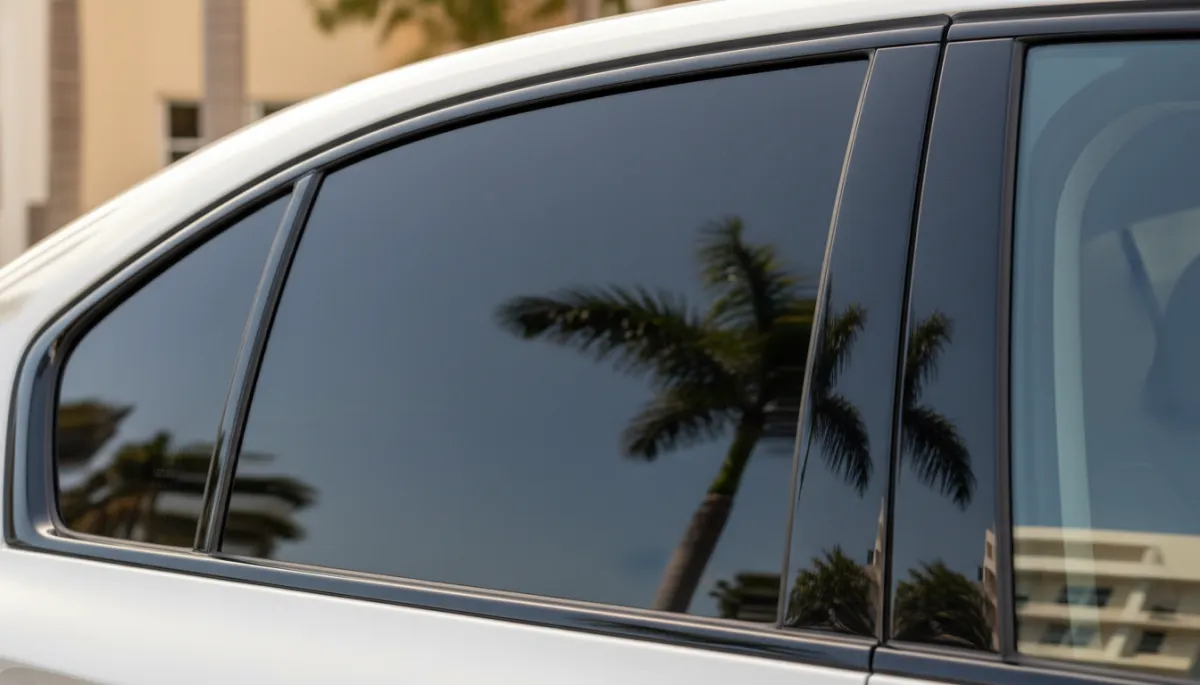
Quality ceramic tint quietly turns ordinary glass into a year-round UV shield.
For parents, the beauty of ceramic tint is that once it’s installed, the protection is automatic. You don’t have to remember anything. A single appointment at a trusted car tint shop near me Miami — like Best Window Tinting on NW 8th Street — and in about two to three hours your car comes back looking clean and factory‑correct, but with a completely different relationship to the sun. From that day forward, every ride through Doral, Little Havana, or Westchester happens behind a medical‑grade UV barrier, not just bare glass.
Beyond UV, ceramic films offer other health‑adjacent benefits that matter in a Miami summer. High‑end 3M ceramic film Little Havana drivers choose can reject a large portion of the sun’s infrared heat, helping keep the cabin cooler and reducing how hard your AC has to work. That’s not just about comfort; a cooler cabin means less cranky toddlers, less overheated car seats, and less risk of heat stress when you’re stuck in traffic near the Palmetto or circling the terminals at Miami International Airport. Glare reduction also makes it easier for you to see the road clearly, which is a safety benefit for everyone in the car.
Why Miami-Dade Families Can't Wait on This
In other parts of the country, sun protection is a seasonal conversation. In Miami‑Dade, it’s a twelve‑month reality. Our UV index doesn’t take a winter break. Even on days that feel overcast as you drive through Coral Gables or South Miami, up to 80% of UV rays can still penetrate clouds. If your family lives anywhere near zip code 33126 — Flagami, West Miami, Sweetwater, Westchester, Doral — your daily routes are bathed in some of the strongest sunlight in the continental United States, all year long.
Add to that how much time Miami families realistically spend in the car. Between school drop‑off, after‑school activities, weekend errands, and visits to abuelos in Little Havana, it’s common for families to log 60–90 minutes a day in the car during the school year. Over a decade of childhood, that’s hundreds of hours of close‑range UV exposure through untreated glass — precisely the kind of cumulative dose dermatologists worry about when they talk about lifetime skin cancer risk.
When you look at it through that lens, ceramic tint isn’t a cosmetic “car accessory.” It’s a health decision. Installing window film Miami‑Dade family cars can rely on is in the same category as choosing a good car seat, insisting on seat belts, or putting helmets on your kids before a bike ride. It’s a one‑time choice that quietly lowers risk every single day afterward. The energy savings, cooler cabin, and preserved upholstery are nice bonuses — your leather seats and dashboard will thank you — but for most parents, the real value is knowing their kids are no longer taking an unnecessary UV hit on every ride.
For neighborhoods like Westchester and Doral, where wide, open roads mean long stretches of direct sun, or Sweetwater and Flagami, where afternoon traffic can trap you in place, delaying this decision simply means more unprotected exposure. Once you understand how little protection standard glass provides, it’s hard to justify waiting another school year to address it. The effortless part is that fixing it doesn’t require changing your life — just choosing the right UV blocking car tint near Miami International Airport and getting it professionally installed.
812 Miami Families Can't Be Wrong
When parents in Flagami or Little Havana start asking around — at school pick‑up, at church, on the sidelines of a soccer field in West Miami — a pattern emerges. The same name comes up again and again when people search for the best window tinting near Flagami Miami or window tinting near Westchester Miami: Best Window Tinting & Car Accessories in Miami‑Dade on NW 8th Street. There’s a reason for that consistency, and it’s written clearly in their online reputation: a 4.8‑star Google rating with more than 812 reviews from local families and drivers.
For health‑focused parents, one detail matters a lot: Best Window Tinting is a 3M Authorized Dealer. That means the 3M ceramic window tint Miami‑Dade families get here is factory‑spec film with documented performance — not an unknown aftermarket product with vague claims. Only certified shops have access to premium lines like 3M’s advanced ceramic and Crystalline films, which are tested to block over 99% of UV rays while maintaining clarity and durability. When you’re making a decision about your child’s skin health, that level of proof and traceability matters.
Another key point: this is not a mobile tint operation. For consistent, bubble‑free, long‑lasting results, high‑quality films need to be installed in a controlled shop environment — not in a parking lot or driveway. At Best Window Tinting, every vehicle, whether it’s a family SUV from Westchester, a sedan from Coral Gables, or a minivan from Sweetwater, is tinted indoors by experienced technicians who do this all day, every day. That’s how they deliver the kind of clean, precise finish you see when you pass cars with deep, even ceramic tint Sweetwater FL or window film Coral Gables drivers proudly show off.
Over the years, the shop has quietly become the go‑to answer when people search for the best window tinting near Doral, window tinting near West Miami, or simply “car tint shop near me Miami” and then ask their neighbors where to actually go. Those 812+ reviews represent real families who have already made the shift from unprotected glass to a safer, cooler cabin. In other words, hundreds of Miami parents have already taken this simple step. If you haven’t yet, you’re not early — but you’re definitely not too late.
Protect Your Family — Book Your Appointment
On NW 8th Street, one short visit can turn every drive into protected time.
If you’re a parent in Miami‑Dade, you already do a thousand little things to keep your kids safe — buckling seat belts, checking car seats, avoiding texting while driving. Adding true UV protection to your car’s windows is one of the rare safety upgrades that asks almost nothing of you after it’s done, yet gives your children a benefit they’ll carry for decades. It’s an effortless layer of defense against a risk that’s very real in our climate, even if it’s invisible through the glass.
Here’s how to take the next step with a team that understands both the science and the neighborhood streets you drive every day:
| Business | Best Window Tinting & Car Accessories in Miami-Dade |
| Address | 7284 NW 8th St, Miami, FL 33126 — minutes from Flagami, West Miami, and Miami International Airport |
| Phone | +1 786-917-2171 |
| Website | https://bestwindowtinting.weebly.com/ |
| Google Reviews | 4.8⭐, 812+ reviews — read what Miami families are saying |
Don’t wait for a diagnosis. One appointment at our NW 8th Street shop is all it takes to protect every backseat passenger in your car — today. Whether you’re searching for UV protection window tint Miami, ceramic window tint for kids Miami, or simply want the most trusted window tinting near West Miami and window tinting near Westchester Miami, you’ll find a team here that treats your family’s health as the first priority.
Follow us on Instagram @bestwindowtinting and Facebook Best Window Tinting Miami for before/after shots, tinting tips, and Miami car culture. Leave us a review on Google — it means the world to us: https://share.google/SeejrUMdvt2gHaz2L
